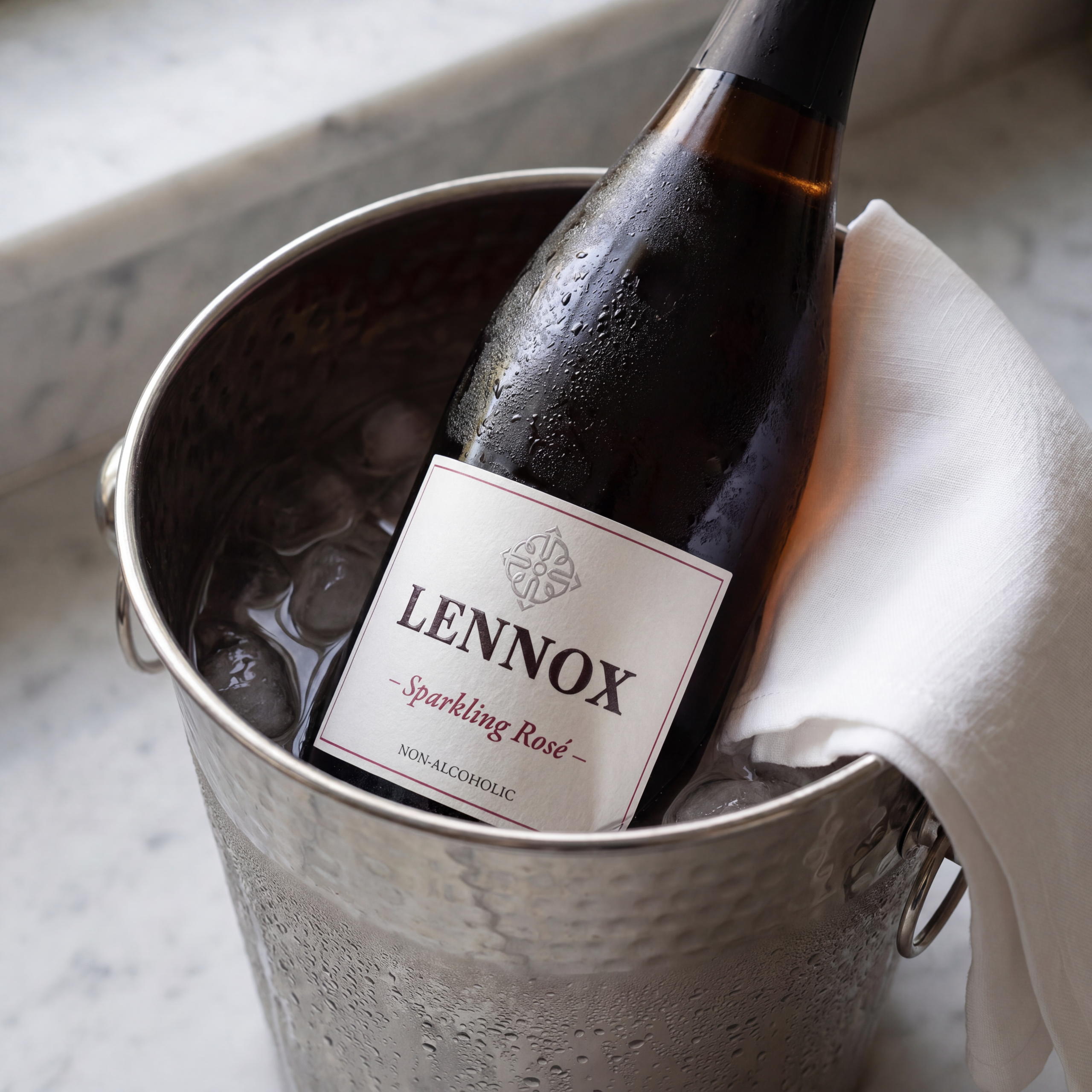
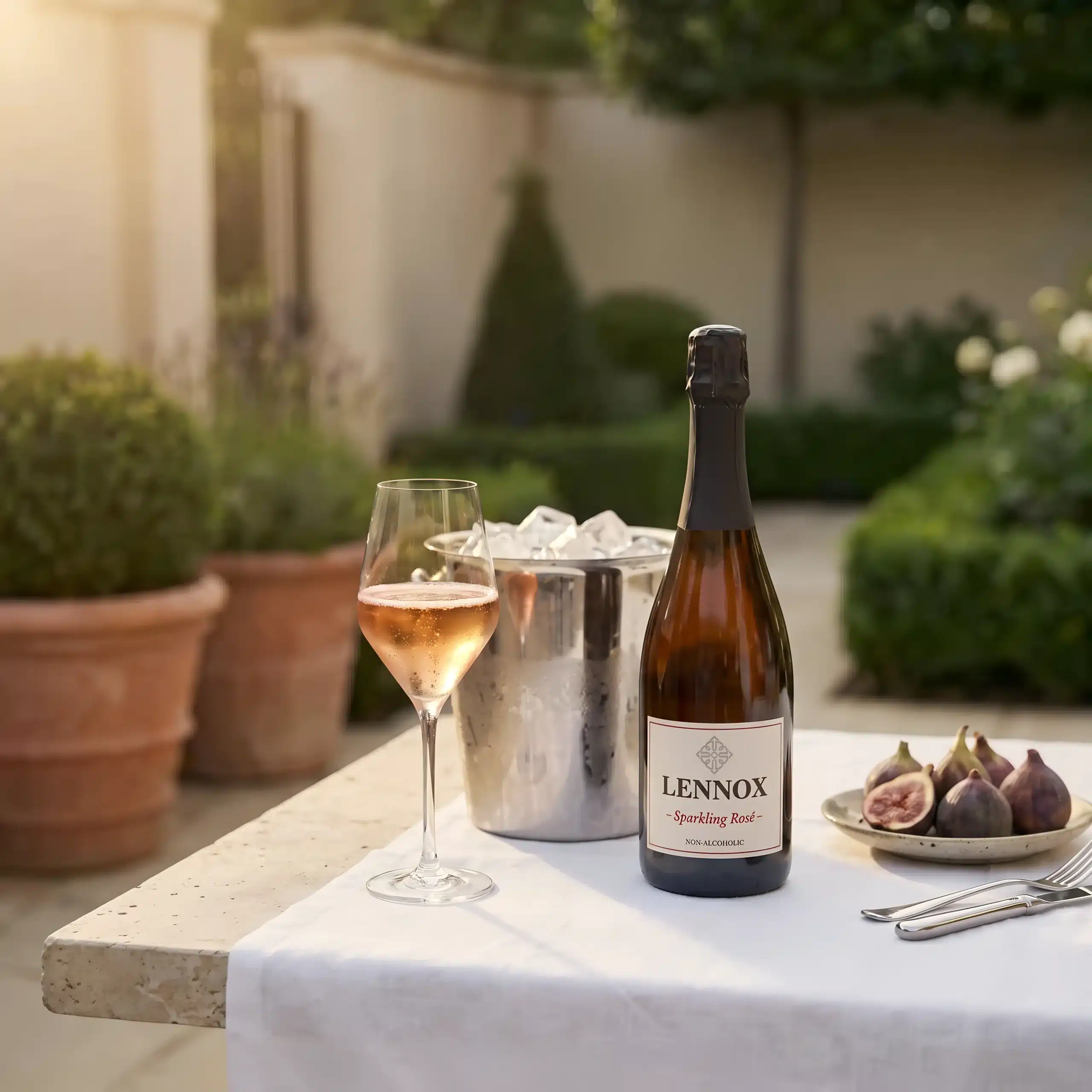
A few small things keep the bottle at its best between bottling and pouring — before opening, and once it’s open.
Before opening
In the cellar or fridge.
Store between 8–14°C, away from direct light. Lennox is at its best up to 24 months after bottling. The label carries the best-before date; treat it as a guideline rather than a deadline. A consistent temperature matters more than a precise one.
After opening
Recork, refrigerate, finish soon.
Once opened, recork with a sparkling stopper and refrigerate; the apéritif keeps for 2–3 days. Better to share the bottle than to save it.
II · Serving temperature
Cold, but not frozen.
Serve at 6°C. This is where the aromatics are at their fullest and the perlage holds its lift — the precise point where Lennox shows best.
Reaching temperature
i.Ice bucket, 20–30 minutes. Half ice, half cold water, bottle submerged to the neck. The water conducts temperature more efficiently than ice alone — the fastest and most reliable method.
ii.Fridge, 3–4 hours. The patient route from room temperature. Take the bottle out 5 minutes before pouring.
iii.Never the freezer. Rapid cooling affects the wine’s character and risks the bottle.
III · Serving Lennox
In a tulip, slowly, against the wall.
Two things matter most: the glass it goes into, and the way it’s poured. Get those right and the rest follows.
The Lennox serve
i. 0.1L per pour. The European apéritif pour.
ii. Tulip glass. Well chilled.
iii. Standalone. Never mixed, never over ice, never topped up.
Glassware
A tulip glass, every time.
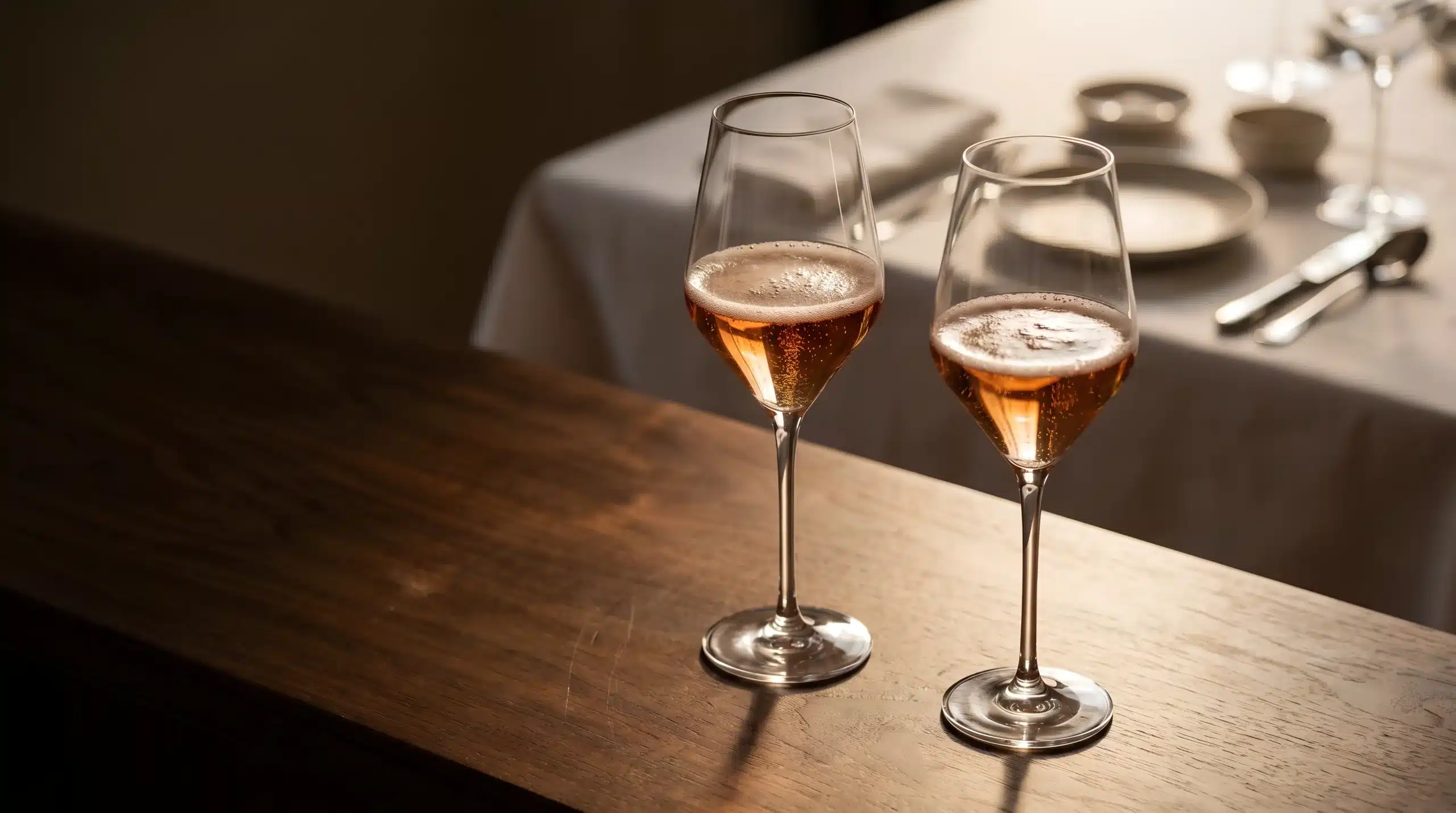
The tulip narrows at the rim and opens at the shoulder — it concentrates aromatics and preserves the bead. Coupes are pretty but lose the carbonation; standard wine glasses are too wide.
Technique
Open quietly, pour patiently.
A loud cork is a sign of pressure escaping too fast — and aromatics with it. Twist the bottle, not the cork; let it ease out under your thumb.
IV · Pairings
What to put beside it.
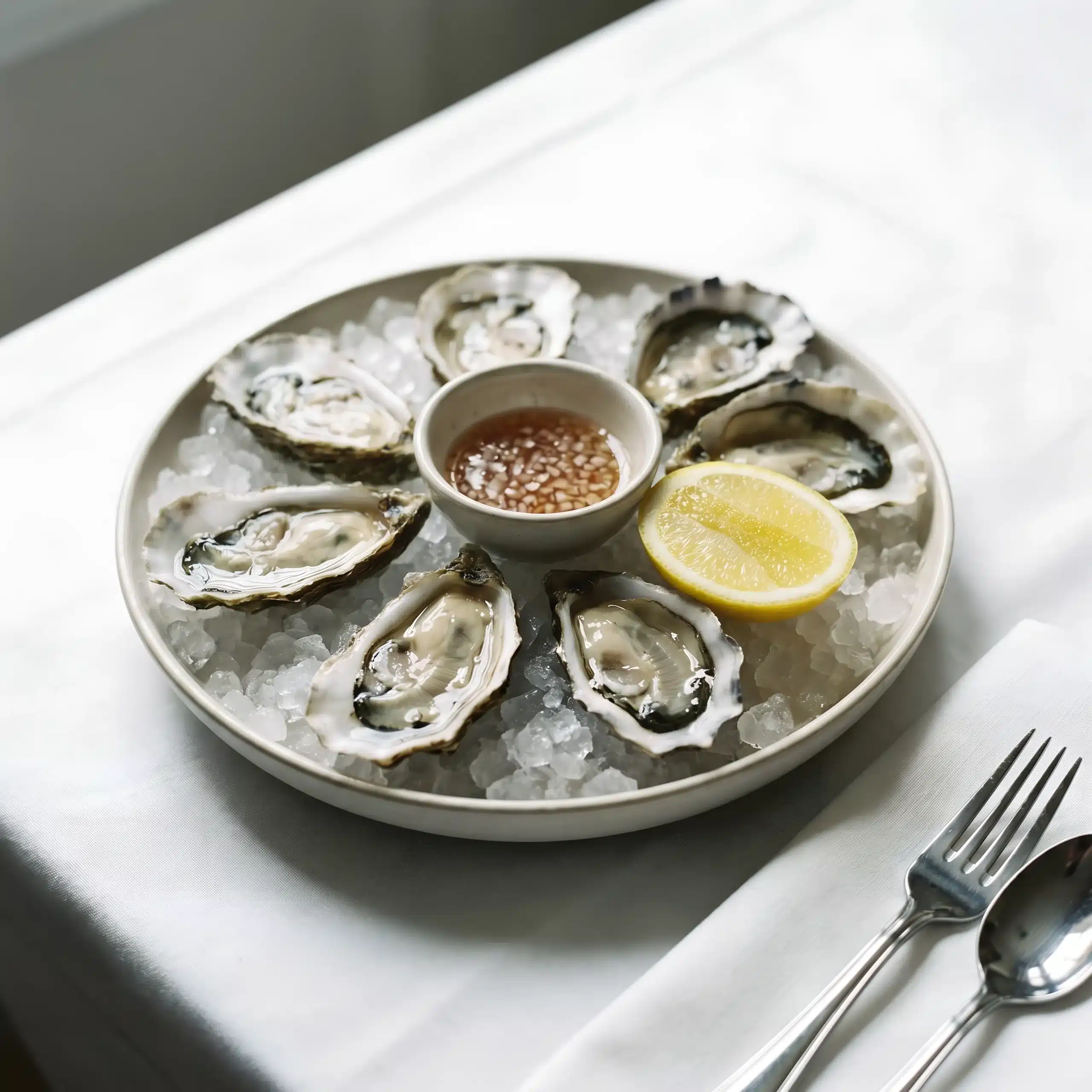
The dry finish meets brine cleanly; the acidity rewards fat and salt. Keep the plates light and immediate, the sweetness fresh and bright – Otherwise, trust the pour.
01
On its own
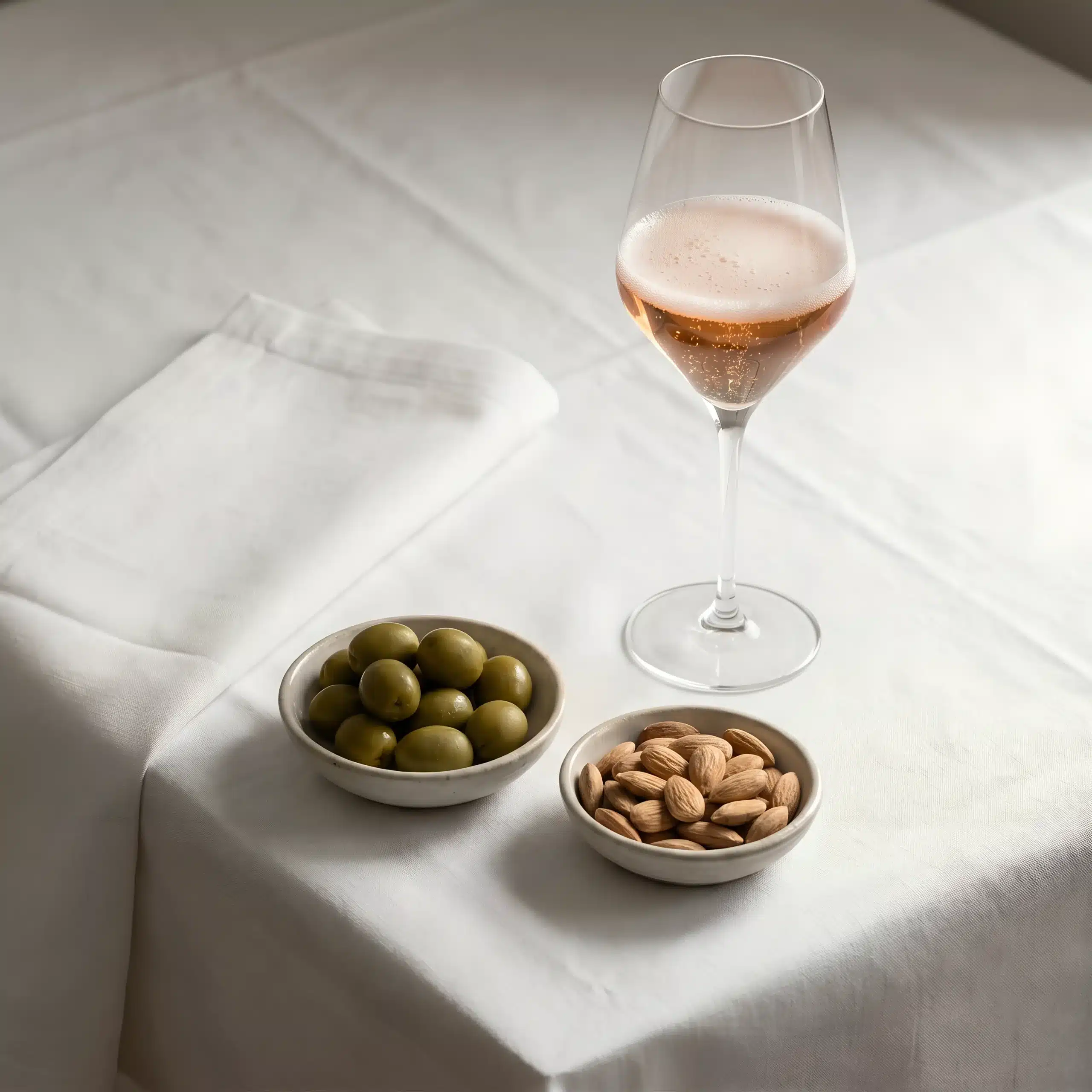
Before dinner, with olives and almonds. Sometimes the simplest pairing is the right one.
02
Charcuterie
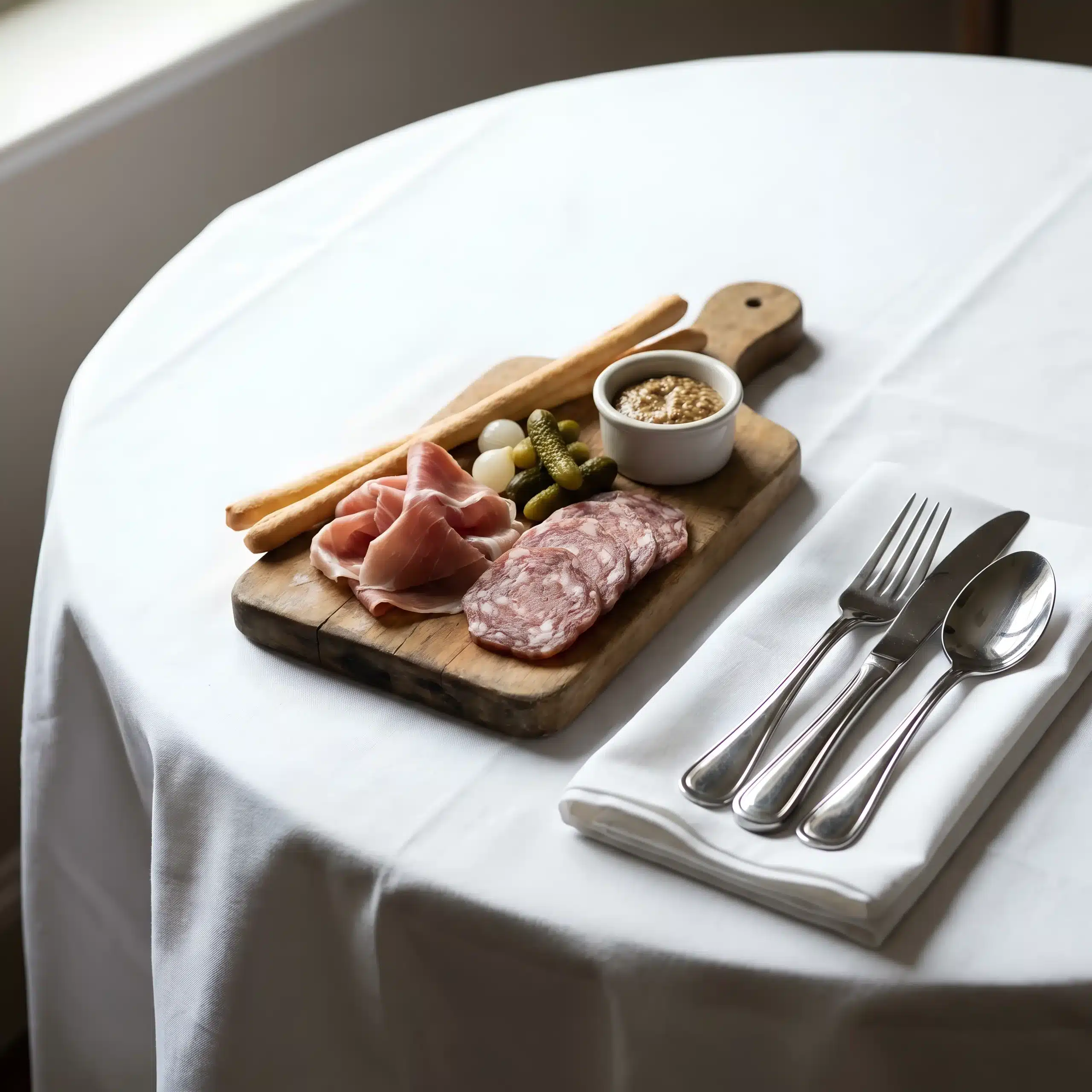
Cured ham, fennel salami, pickled vegetables. The acidity matches both salt and fat.
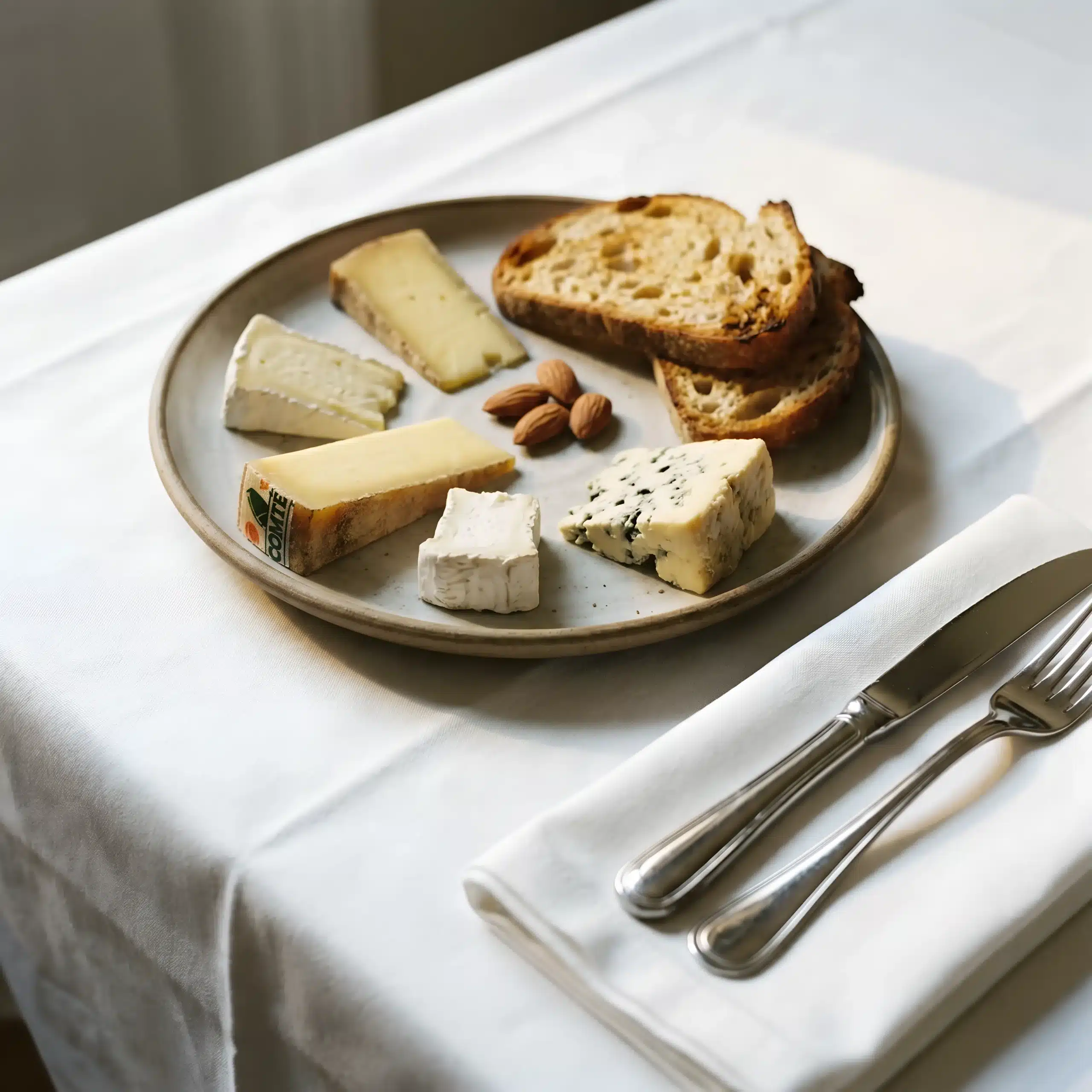
Fresh goat’s cheese, burrata, young brie. The bead lifts the cream.
05
Summer salads
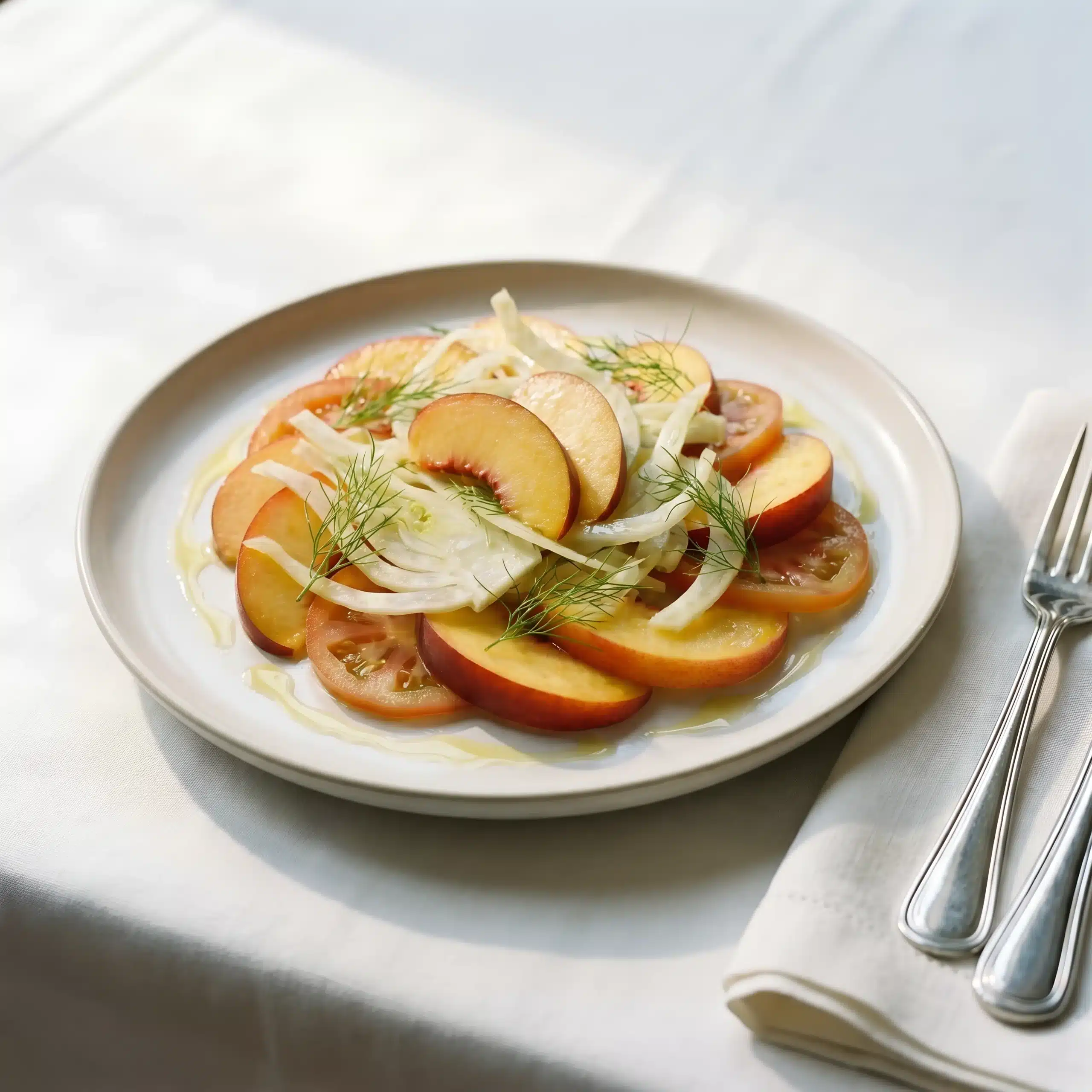
Tomato and stone fruit, fennel and citrus. Acidity meets acidity.
06
Fruit-led desserts
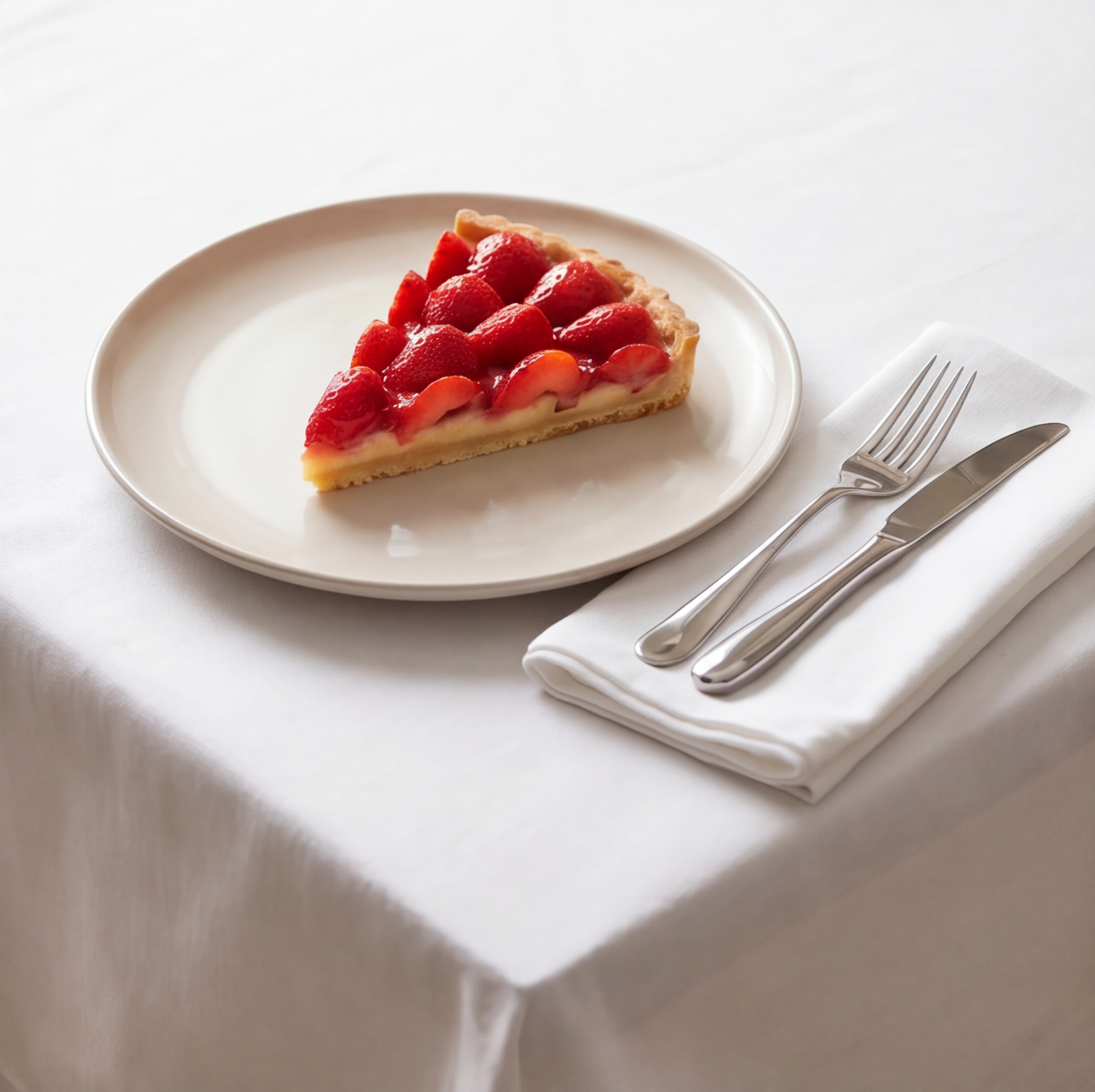
Poached pear, strawberry tart, lemon posset. Keep the sweetness light and bright.
V · Occasions
Where an apéritif belongs.
No. 01
The apéritif.
The first pour of the evening, before the table is set and while the kitchen is still warm. The drink that signals the day is closing — quietly — and something else is starting.
Serve well chilled. Pair with olives, salted almonds, a few thin slices of cured ham. No need for more.
No. 02
A summer afternoon.
Outside, no reason needed. The sun moves; the conversation lengthens; the bottle lasts. An apéritif that doesn’t ask to be the centre of attention, only to keep up with it.
Keep the ice bucket close. Refresh glasses on the half-pour, not the empty one.
No. 03
The toast.
Lennox is the apéritif — restrained, self-assured. For the toast that earns the glass.
Pour generously. Once everyone has a glass, lift it slowly. The gesture is the point.
No. 04
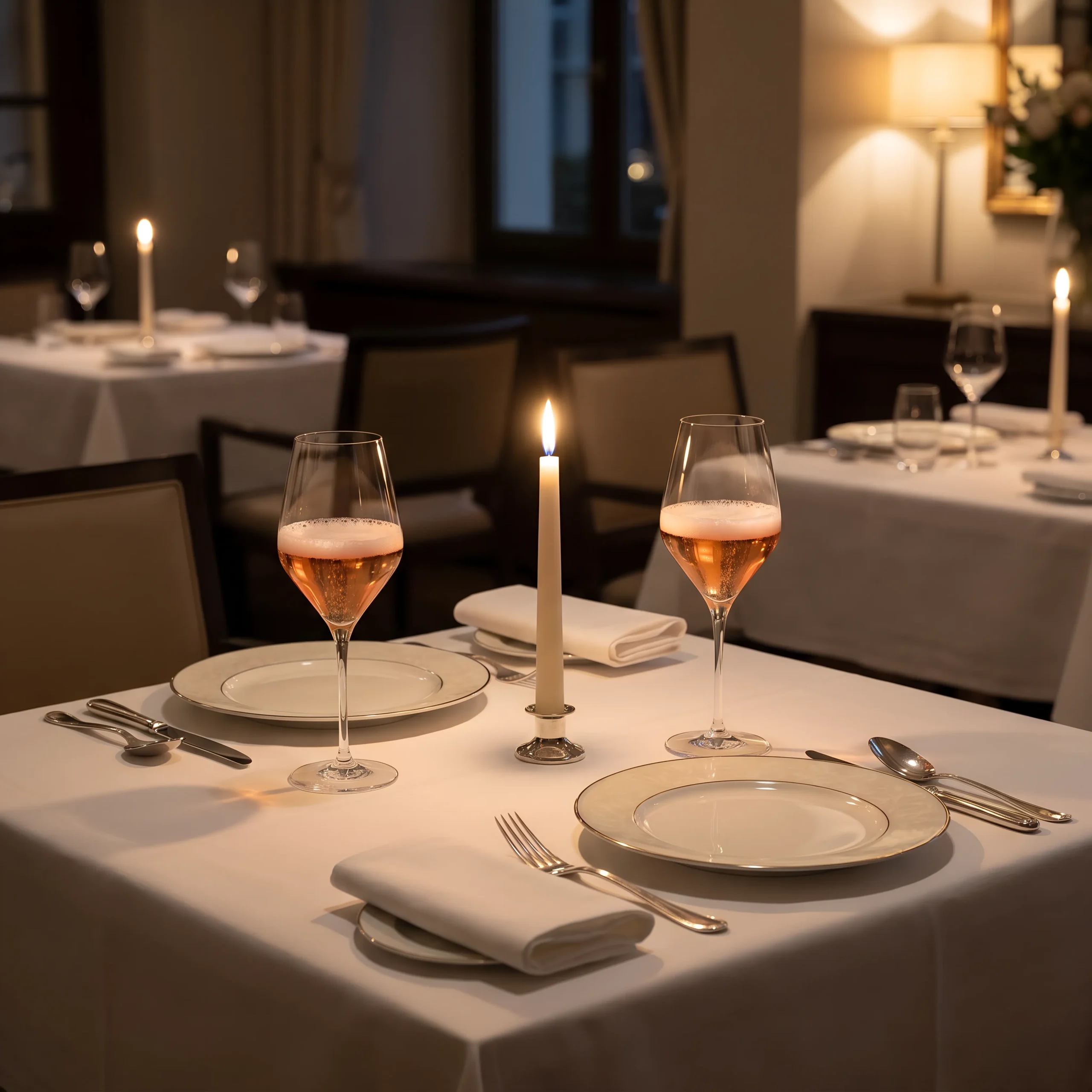
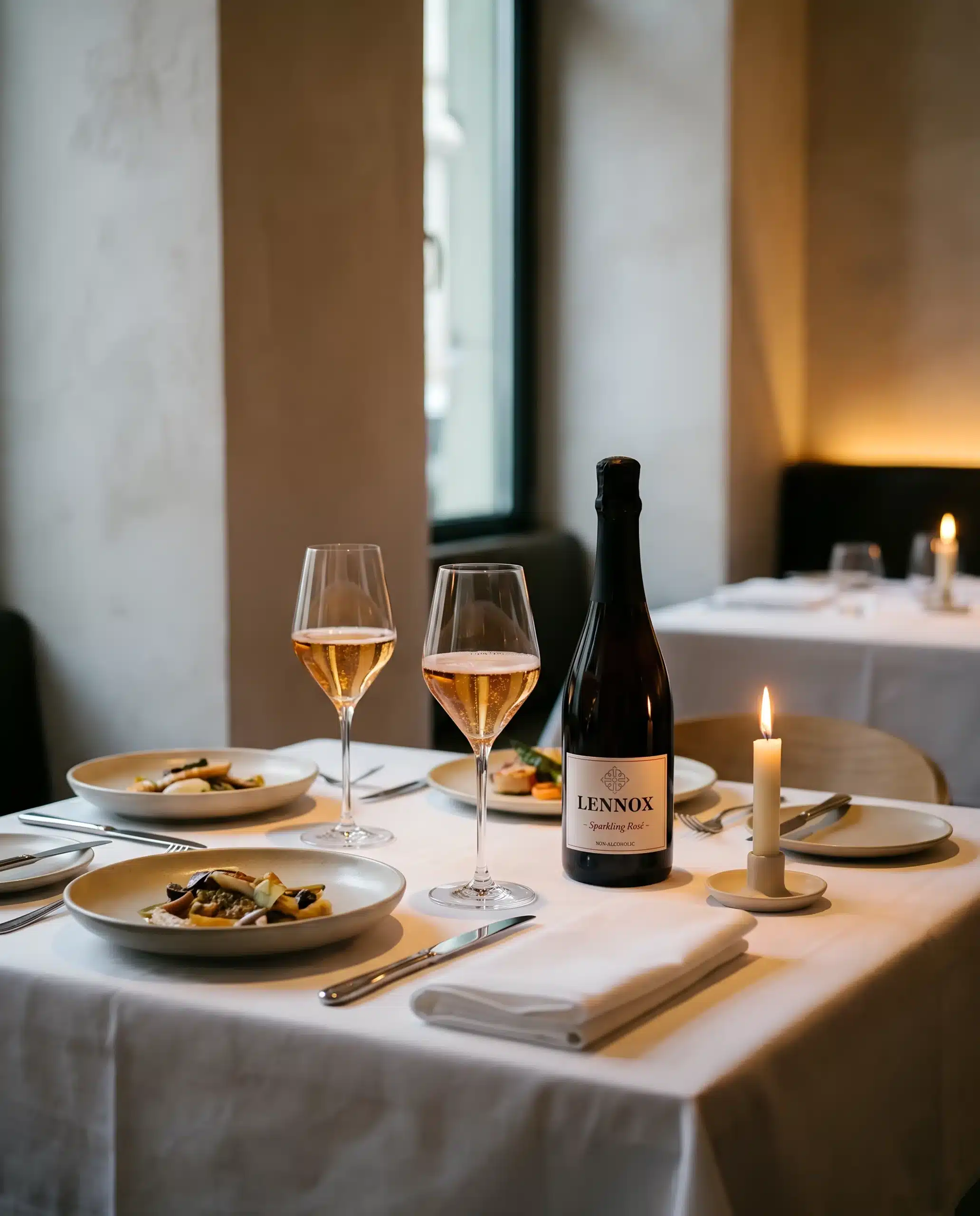
A quiet dinner.
Two people, three plates, one shared bottle. The structure of the apéritif holds against richer plates; the perlage resets the palate between them.
One bottle is enough for a slow dinner of two — poured at the table, then again with the cheese.
No. 05
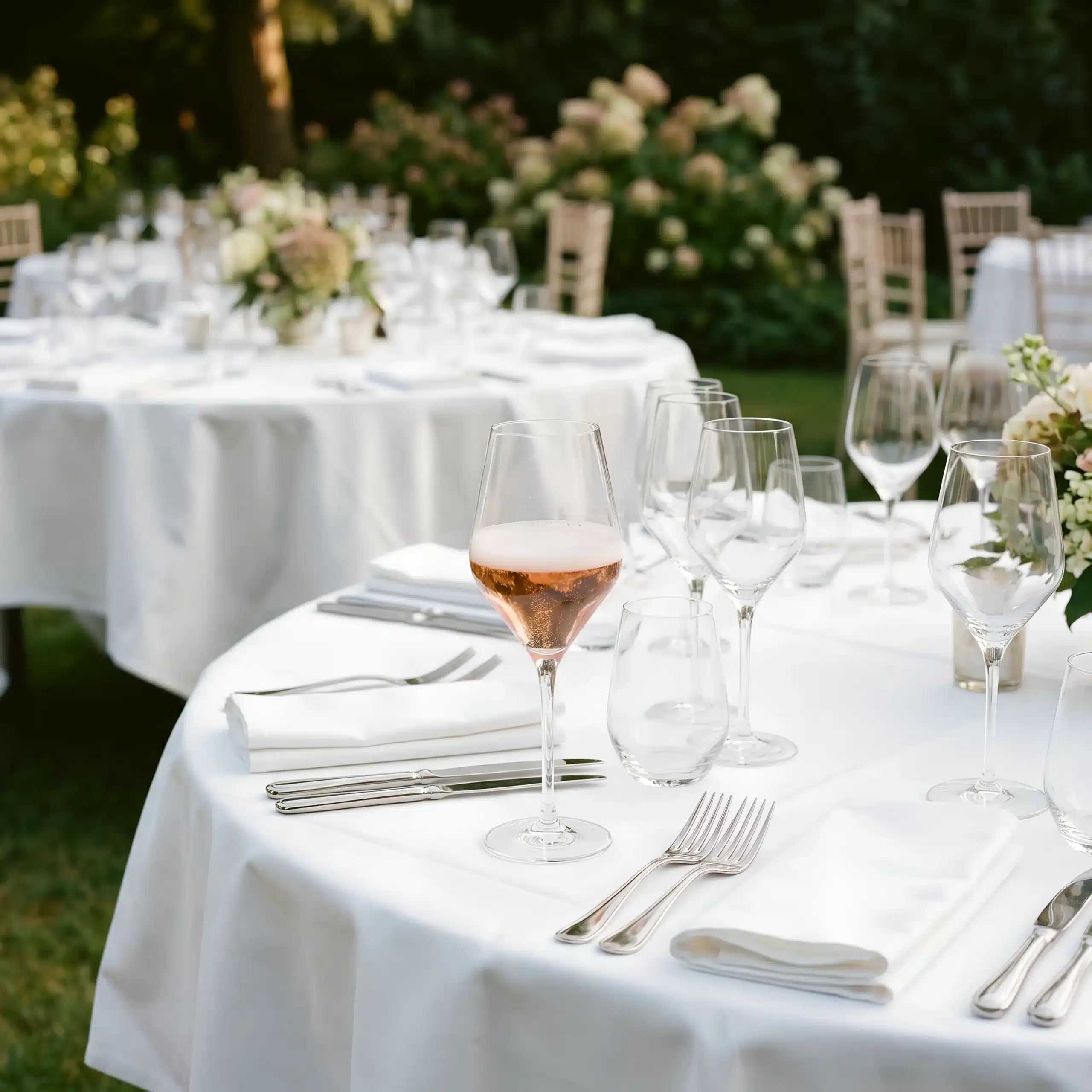
The wedding toast.
At a wedding, every guest deserves to raise the same glass. Lennox earns its place at the toast — for the curious, and for anyone who’d simply rather choose it. The apéritif for everyone at the table.
Salmon pink in the photograph. Tulip glasses where the venue has them, flutes otherwise. Lennox holds its character either way.
The apéritif, delivered.
A single bottle, or a case of six. Delivered in 1–3 working days.